Empowered Budgeting Toolkit: Plan, Track & Save Monthly

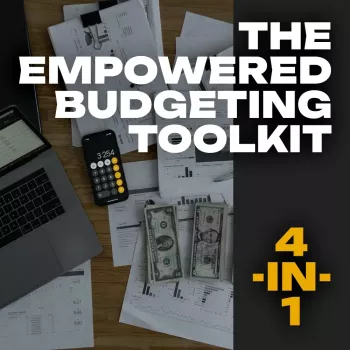
The Empowered Budgeting Toolkit: A 4-in-1 Bundle for Monthly Clarity, Smarter Saving, and Wealth Mindset
A strong budget is more than a spreadsheet—it’s a repeatable system for decisions, habits, and confidence. The Empowered Budgeting Toolkit brings together a budget planner, an Excel guide, monthly expense tracking, savings and wealth strategies, plus guided affirmations designed to support consistent follow-through. Instead of starting over every time life changes, this bundle is built to help you plan, track, review, and adjust—month after month.
What’s Included in the 4-in-1 Bundle
- Budget planner structure to organize income, bills, variable spending, and goals in one place.
- Excel-focused guidance for building a flexible workflow that’s easy to update without rewriting your whole plan.
- Monthly expense and savings tracking designed to support consistency without restarting each month from scratch.
- Wealth strategies + mindset reinforcement through guided affirmations that support follow-through.
- A toolkit flow that makes sense: planning → tracking → reviewing → adjusting.
Who This Toolkit Fits Best
- Anyone who wants a clear monthly plan with room for real-life changes (unexpected bills, schedule shifts, variable income).
- Spreadsheet users who prefer formulas, automation, and quick updates instead of manual math.
- Goal-driven savers working toward an emergency fund, debt payoff, or more consistent investing.
- People who struggle with budgeting follow-through and want supportive prompts and affirmations.
- Households that want one system for day-to-day spending decisions and long-term priorities.
A Simple Monthly Workflow That Builds Momentum
The easiest budget to maintain is the one with a predictable rhythm. A monthly workflow turns budgeting into a routine rather than a once-in-a-while project.
- Set up the month: list income dates, fixed bills, and non-negotiables first.
- Allocate “flex” categories: groceries, gas, dining, personal spending—give each a realistic cap.
- Track in short check-ins: log spending daily or every 2–3 days to avoid end-of-month surprises.
- Run a weekly review: spot category drift, upcoming irregular expenses, and quick fixes.
- Close the month with a recap: note wins, gaps, and choose one adjustment for next month.
How the Excel Guide Can Make Budgeting Easier
Excel shines when you want a system that stays clean even after changes—like a different pay schedule, a bill increase, or a new savings goal. When your spreadsheet is designed to be updated, it becomes a practical tool instead of something you dread opening.
- Faster updates: one place to log expenses reduces missed items and duplicate entries.
- Cleaner visibility: totals and category summaries help you spot patterns without manual math.
- Flexible planning: change a few numbers to rebalance quickly after income or bill changes.
- Better forecasting: track sinking funds and irregular expenses to reduce “surprise” spending.
- Habit-friendly: a repeatable spreadsheet routine lowers the friction of staying consistent.
Monthly Expense Tracking That Actually Helps Decision-Making
Expense tracking works best when it helps you decide what to do next—not when it becomes a judgment session. The key is separating what you planned from what happened, then using the difference to steer the rest of the month.
- Separate “planned” from “spent” so your budget becomes a steering wheel, not a report card.
- Use categories that match real choices (for example, splitting food into groceries vs. dining).
- Add notes for unusual expenses so one-off costs don’t create fake “patterns.”
- Include a buffer line item to absorb small overages without derailing the plan.
- Review the top 3 categories monthly and pick one achievable improvement.
Example Monthly Budget Snapshot (Template Structure)
| Category | Planned | Spent | Difference | Next-Month Adjustment |
|---|---|---|---|---|
| Housing & Utilities | $1,600 | $1,600 | $0 | No change |
| Groceries | $450 | $510 | -$60 | Add $25 + plan 2 low-cost meals/week |
| Dining & Coffee | $120 | $165 | -$45 | Set a weekly cap + pre-load a card |
| Transportation | $220 | $205 | +$15 | Move $10 to savings |
| Savings (Emergency/Goals) | $300 | $300 | $0 | Increase by $10 if income allows |
Savings and Wealth Strategies to Pair With Your Budget
- Pay yourself first: automate a small transfer tied to payday, then scale gradually.
- Use sinking funds: plan for predictable “random” costs like car repair, holidays, school needs, and subscriptions.
- Try a one-change rule: optimize one category per month to avoid burnout.
- Set a minimum savings floor: even $10–$25 keeps the habit alive in tight months.
- Create a fun-money plan: enjoyment is intentional, not accidental.
For credible budgeting fundamentals and consumer tools, the Consumer Financial Protection Bureau (CFPB) offers straightforward guidance. If you want broader context on where households tend to spend, the U.S. Bureau of Labor Statistics Consumer Expenditures data can help you sanity-check categories and expectations.
Guided Affirmations for Wealth: Using Mindset Tools Without Ignoring Math
Common Pitfalls and Quick Fixes
As you build new money routines, it also helps to protect what you’re saving. If you ever run into suspicious charges or fraudulent messages, the Federal Trade Commission’s fraud reporting resource is a practical place to start.
Product Details at a Glance
Recommended Tools (In Stock)
- The Empowered Budgeting Toolkit | 4-in-1 Bundle| Budget Planner & Excel Guide| Monthly Expense Savings, Wealth Strategies & Guided Affirmations for Wealth
- Essential Adult Skills Guide | Budgeting, Communication, Media Literacy & Life Management Tips for Everyday Success
FAQ
Is this better for beginners or experienced budgeters?
It fits both: beginners get a clear structure and supportive prompts, while experienced budgeters benefit from an Excel-friendly workflow and a consistent monthly review cadence that’s easy to maintain.
How much time does monthly budgeting take with a toolkit like this?
Plan about 20–30 minutes to set up the month, 5 minutes per tracking check-in (daily or every 2–3 days), and 10–15 minutes for a weekly review to keep categories on track.
Do affirmations replace a budgeting plan?
No—affirmations support consistency and reduce stress, but the budget plan and tracking are what drive financial decisions, accountability, and measurable progress.










Leave a comment